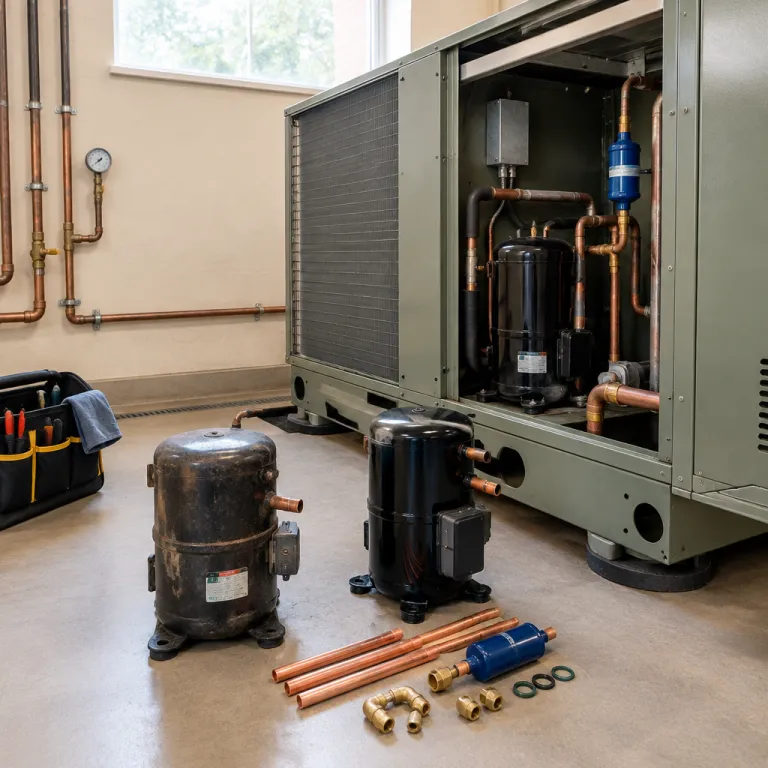
Why office managers must take control of compressor repairs
When an office air conditioning system fails, productivity and staff comfort decline quickly. A failed compressor in a central air conditioner can halt cooling across multiple floors, which makes every hour of downtime visible to senior leadership and to your team. As an office manager in a United Kingdom company, you must understand when to repair an air conditioning compressor, when to plan compressor replacement, and how to keep the overall HVAC system working reliably.
The compressor is the heart of any air conditioning unit, because it circulates refrigerant between the indoor evaporator and the outdoor unit to move heat out of the building. When the compressor working pattern changes, such as hard starts, tripping electrical breakers, or short cycling, you often see early signs of compressor failure before the conditioning system stops completely. Treat these signals as operational data, because timely compressor repair or targeted compressor repairs can reduce long term repair costs and avoid more expensive replacement cost scenarios.
In a typical UK office, the HVAC system serves meeting rooms, open plan areas, and sometimes server rooms that need constant cooling. A single compressor HVAC failure in a packaged rooftop unit can affect both air quality and heat removal, which then impacts staff well being and sensitive equipment. By learning the basics of compressor repair, HVAC compressor operation, and realistic repair versus replacement options, you can challenge service providers constructively and secure more cost effective outcomes for your organisation.
Understanding how your office compressor and HVAC system really work
A modern office air conditioning system relies on a closed loop of refrigerant, driven by the compressor, to remove heat from indoor air. The compressor unit raises the pressure and temperature of the refrigerant, which then releases heat through the outdoor unit and its condenser coils before returning indoors to absorb more heat. When the compressor working cycle is stable, the air conditioner maintains consistent cooling while using electrical power efficiently and keeping operating costs predictable.
From a management perspective, you should map each HVAC system to the spaces it serves, including which compressor HVAC assets support critical rooms such as IT suites. Ask your HVAC professional to explain where each compressor, set of coils, and electrical control panel is located, and request a simple schematic that your team can reference during incidents. This documentation supports better HVAC maintenance planning, clearer communication during repairs, and more accurate evaluation of whether a specific compressor is worth repairing or whether full compressor replacement is justified.
Service providers sometimes focus narrowly on the failed unit, but you need a whole system view that includes ductwork, controls, and building usage patterns. For example, repeated compressor failure on one floor might reflect poor airflow, dirty condenser coils, or incorrect refrigerant charge rather than a defective compressor itself. When you understand how each conditioning system interacts with occupancy levels and internal heat gains, you can challenge any recommendation that jumps straight to expensive replacement without exploring staged repairs or optimisation of existing units, and you can align this with robust health contract management practices described in this guide on raising the bar in health contract management for UK office managers.
Service provider management and avoiding unnecessary compressor replacement
Managing HVAC service providers in a United Kingdom company requires the same discipline you apply to any high value facilities contract. When a contractor recommends compressor replacement, you should always request a clear breakdown of fault diagnosis, repair costs, projected replacement cost, and the expected remaining life of the wider system. This structured challenge helps you distinguish between genuinely necessary compressor repairs and proposals that lean too quickly towards full replacement of the air conditioning unit.
Ask your HVAC professional to document test readings, such as compressor electrical current, refrigerant pressures, and temperature differences across coils, because these data points support objective decisions. If the compressor failure is due to a single failed component, such as a contactor or capacitor, a targeted compressor repair may be far more cost effective than replacing the entire compressor HVAC assembly. You should also insist on clarity about labour charges, parts mark up, and any hidden costs that might make a repair versus replacement option less attractive than it first appears.
Office managers also carry responsibility for contractor behaviour and visitor safety while works are carried out on the outdoor unit or internal air handling equipment. When negotiating service contracts, align technical requirements for HVAC maintenance with legal duties on third party conduct, using guidance such as this overview of the all reasonable steps standard for visitors and contractors. By combining strong behavioural clauses with clear technical performance indicators for compressor working reliability, cooling capacity, and response times for emergency repairs, you create a balanced framework that protects both your organisation and your staff.
Cost control, repair versus replacement, and budget planning
Financial control around HVAC maintenance starts with understanding the full cost of compressor repair and the long term implications of repeated failures. Direct repair costs include labour, parts, refrigerant, and any electrical upgrades, while indirect costs cover lost productivity, temporary cooling hire, and disruption to client meetings. When you compare repair versus replacement options, you should calculate the total costs over several years, not just the immediate invoice amount.
In many UK offices, an older air conditioning system with frequent compressor failure can become more expensive to keep working than to replace. A new compressor replacement or complete unit upgrade may reduce energy costs, lower the risk of unplanned downtime, and improve staff comfort, which together deliver a better overall ROI for your organisation. Ask suppliers to provide side by side scenarios that show annual energy costs, expected maintenance costs, and projected replacement cost, so you can judge whether a proposed compressor repair is genuinely cost effective or simply delaying the inevitable.
When reviewing quotes, insist on itemised costs for each compressor HVAC intervention, including separate lines for coils cleaning, refrigerant recovery, and safety checks on electrical circuits. This level of detail allows you to benchmark different HVAC professional proposals and to build a multi year budget that smooths large expenses rather than reacting to each failure as an emergency. For larger estates with many air conditioning units, consider a planned programme of compressor repairs and phased replacement that aligns with lease terms, capital expenditure cycles, and sustainability targets for reduced energy use and lower carbon emissions.
To support these decisions, use a simple checklist when comparing repair and replacement options:
- Compare compressor repair cost with estimated replacement cost and remaining service life.
- Factor in energy efficiency, expected downtime, and impact on critical business areas.
- Review maintenance history, frequency of compressor failure, and availability of spare parts.
- Include indirect costs such as staff disruption, temporary cooling, and reputational impact.
Practical maintenance strategies to reduce compressor failures
Preventive maintenance is the most reliable way to extend compressor life and avoid sudden failure in busy offices. A structured HVAC maintenance plan should include regular cleaning of condenser coils, checks on refrigerant charge, inspection of electrical connections, and verification that each air conditioning unit is delivering the specified cooling output. When these tasks are completed on schedule, the compressor working conditions remain stable, which reduces stress on components and lowers the likelihood of expensive compressor repairs.
Office managers should agree clear maintenance frequencies with their HVAC professional, based on manufacturer guidance, building usage, and local environmental factors such as pollution or coastal air. For example, rooftop outdoor unit installations in city centres often need more frequent coils cleaning to maintain efficient heat rejection and to keep the conditioning system within design parameters. You can also use QR enabled asset tags and digital registers, as described in this guide to strengthening office asset control in UK businesses, to track each compressor, log repairs, and monitor trends in repair costs across your portfolio.
Simple operational checks by your team can support formal maintenance visits and help identify early signs of compressor failure. Encourage staff to report unusual noises from the outdoor unit, reduced cooling in specific zones, or frequent tripping of electrical breakers, because these symptoms often precede a full breakdown. By combining staff awareness, disciplined HVAC system inspections, and data driven analysis of compressor repair history, you can intervene early, keep costs under control, and maintain a comfortable working environment throughout the year.
Risk management, compliance, and long term service provider performance
Air conditioning failures are not only comfort issues, they are also business continuity and compliance risks in many United Kingdom companies. Critical spaces such as server rooms, trading floors, or clinical areas may require guaranteed cooling, which means compressor failure in those zones can trigger contractual penalties or data centre shutdown procedures. As an office manager, you should map these high risk areas and ensure that compressor repairs and compressor replacement plans prioritise them within your wider HVAC maintenance strategy.
Service level agreements with your HVAC professional should specify response times for emergency repairs, availability of key compressor HVAC spare parts, and escalation routes if an air conditioning system cannot be restored quickly. Include measurable KPIs such as average time to restore cooling, number of repeat failures per unit, and percentage of planned versus reactive maintenance, because these indicators help you evaluate whether your provider is delivering cost effective performance. Over time, this data will show whether frequent compressor repair on a particular unit signals deeper design issues, poor installation, or simply end of life for that equipment.
Long term, you should integrate HVAC system resilience into your broader facilities risk register, alongside fire safety, electrical safety, and water hygiene. This means documenting single points of failure, such as a lone compressor serving a critical area, and planning either redundancy or rapid replacement options to mitigate those risks. By treating air conditioning, compressor working reliability, and associated repair costs as strategic issues rather than ad hoc technical problems, you strengthen your authority as an office manager and protect both staff well being and organisational performance.
Key statistics for office HVAC performance and compressor reliability
- According to the UK Department for Energy Security and Net Zero, non domestic buildings account for around 12 percent of total UK greenhouse gas emissions, with a significant share linked to heating and cooling energy use, which means more efficient compressor working can materially reduce both costs and environmental impact. See, for example, the department’s latest statistics on UK greenhouse gas emissions and building energy use.
- Field studies by the Chartered Institution of Building Services Engineers report that poorly maintained condenser coils can increase air conditioning energy consumption by up to 30 percent, so regular coils cleaning and HVAC maintenance directly lowers operating costs and extends compressor life. These findings are summarised in CIBSE guidance on energy performance in buildings.
- Industry surveys from the Building Engineering Services Association indicate that reactive only HVAC maintenance can be up to 40 percent more expensive over the life of a system than planned preventive maintenance, largely due to higher compressor repair costs and unplanned replacement cost events. BESA’s maintenance best practice publications provide further detail on these lifecycle cost comparisons.
- Data from major UK insurers show that electrical faults are among the top causes of HVAC system claims, which underlines the importance of regular inspection of electrical connections, overload protection, and control panels associated with each compressor HVAC installation. Insurer risk engineering bulletins frequently highlight HVAC electrical failures as a preventable loss category.
- Studies of commercial air conditioning systems in Europe suggest that optimised refrigerant charge and well maintained outdoor unit airflow can improve cooling efficiency by 10 to 20 percent, which helps justify investment in proactive compressor repairs and detailed performance monitoring. These results are reflected in several European building energy efficiency research programmes.
FAQ: managing compressor repairs in UK offices
How can I tell if our office compressor is worth repairing
Assess whether the compressor repair cost is less than around half of the replacement cost and whether the air conditioning system is still within its expected service life. If the unit has a good maintenance history, no major refrigerant leaks, and no repeated electrical faults, a repair is often a sound investment. When failures are frequent, energy bills are rising, and spare parts are scarce, compressor replacement or full system upgrade usually becomes the more cost effective option.
What are the most common causes of compressor failure in offices
Common causes include dirty condenser coils that restrict heat rejection, incorrect refrigerant charge, and poor airflow around the outdoor unit, all of which force the compressor to work harder. Electrical issues such as voltage imbalance, loose connections, or failing contactors also contribute to premature compressor failure. Inadequate HVAC maintenance and blocked filters can further increase system pressures and temperatures, accelerating wear on both the compressor and associated components.
How often should office HVAC systems be serviced to protect compressors
Most UK office environments benefit from at least two planned HVAC maintenance visits per year, typically before the main cooling and heating seasons. High criticality areas, polluted locations, or heavily loaded systems may require quarterly inspections to keep coils clean, refrigerant levels correct, and electrical components in safe working order. Your HVAC professional should tailor the schedule to your specific building, usage patterns, and manufacturer recommendations.
What information should I request from HVAC contractors after a compressor repair
Request a written report that includes the root cause of failure, test readings before and after the repair, parts replaced, labour hours, and any recommendations to prevent recurrence. Ask for confirmation that refrigerant handling complied with UK F gas regulations and that all electrical safety checks were completed. Keep these reports in a central asset register so you can track trends in repair costs and identify units that may soon require compressor replacement.
How can I benchmark HVAC service providers on cost and performance
Use consistent KPIs such as average response time, first time fix rate, number of repeat compressor repairs, and total annual costs per unit to compare providers. Combine these metrics with qualitative feedback from building users about comfort and noise levels to gain a balanced view of performance. Over several years, this data will show which contractors deliver reliable, cost effective support for your air conditioning and HVAC system assets.