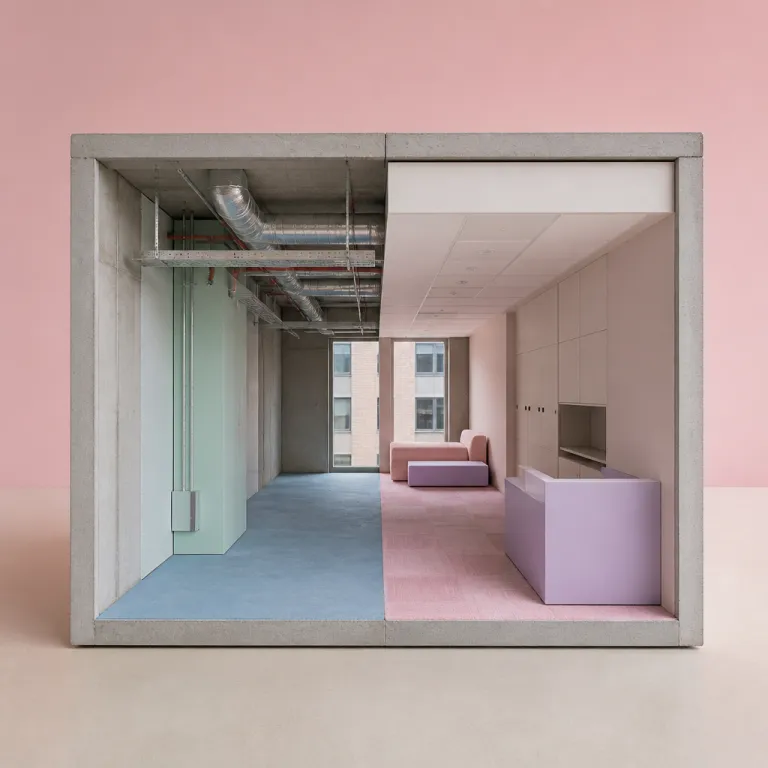
Cat A vs Cat B office fit out: UK costs, benchmarks and strategy
Summary for busy office managers: In the United Kingdom, typical Cat A refurbishment costs range from about £25–£70 per square foot (roughly £270–£750 per square metre), while Cat B office fit out costs usually sit between around £50–£150 per square foot (approximately £540–£1,615 per square metre), depending on region and specification. For a 1,000 square metre London office, a realistic combined Cat A plus Cat B budget often runs into £2–£3 million once you include professional fees, contingency and VAT. Use these ranges as a first pass cost guide, then refine them with project‑specific data, quantity surveyor input and a structured checklist or cost calculator.
Why Cat A and Cat B matter for your next office move
Every office manager in the United Kingdom eventually collides with the Cat A versus Cat B question. The Cat A / Cat B fit out cost conversation usually starts with a landlord’s agent dropping jargon into what you thought was a simple office space viewing, and suddenly you are making six figure commitments without a clear cost guide or shared definition. In a tight London market where Grade A vacancy is low and fit out costs are rising, you cannot afford to treat this as a basic technicality.
Cat A is the landlord’s core fit of the shell and core, which will typically include mechanical and electrical systems, raised floors, suspended ceilings, fire protection and very simple lighting but no partitions, meeting rooms or furniture. Cat B is the tenant’s office fit layer on top, where your business pays for office design, interior design, construction, furniture, AV, kitchen, branding and all the project management that turns a basic Cat A office into a working environment. When you negotiate fit out terms, you are really negotiating who funds which layer of works, how much each layer will cost per square metre and how much Monday morning friction you are willing to tolerate later.
For any new project, you should treat the Cat A / Cat B office fit decision as a board level capital allocation choice, not a facilities afterthought. A Cat A heavy deal might look cheap on headline rent but push high fit out cost exposure onto your budget, while a Cat B contribution from the landlord can reduce your upfront spend but lock you into their preferred design standards and contractors. The right fit for your office will depend on lease length, long term headcount plans, utilisation of office space and your appetite to manage construction risk directly.
What Cat A really includes, and where the grey zones start
On paper, Cat A is simple; in practice, the Cat A versus Cat B boundary is where many office managers lose leverage. A typical Cat A specification for a London office space will include the shell and core structure, core fit elements such as lifts, stairwells and WCs, plus building wide M&E, raised access floors, suspended ceilings and compliant emergency lighting. You receive a clean, safe, empty box that is technically ready to fit out but operationally useless for a modern business.
The grey zone sits between that basic Cat A definition and the realities of your office fit needs, because some landlords now offer enhanced Cat A plus packages that blur into Cat B. In these deals, they might add more sophisticated lighting design, extra small power, limited data cabling or even a few generic meeting rooms, and then present a blended Cat A / Cat B fit out cost figure that is hard to benchmark against the wider market. Your job is to unbundle those costs, understand the true fit out cost per square metre and decide whether you want control or convenience.
Push hard on three negotiation levers whenever you review a Cat A schedule for a new project. First, specify power and data capacity that will fit your long term utilisation, not just the minimum headcount you have today, because retrofitting later is always more expensive than doing it during initial construction. Second, insist on acoustic treatment in the base build where possible, especially around risers and plant rooms, because no amount of later office design or furniture will fully fix a noisy core; third, align Cat A environmental performance with your corporate targets so you are not paying twice for sustainability upgrades when you later try to reduce office energy use and running costs using frameworks such as the detailed benchmark walkthrough on reducing UK office running costs.
What Cat B covers, and how to control the spend
Cat B is where your office finally starts to look like somewhere people will actually work, and it is also where the combined Cat A and Cat B fit out numbers can quietly double if you are not disciplined. A full Cat B office fit typically covers partitions, glazed fronts, meeting rooms, collaboration zones, kitchen and tea points, reception, signage, AV, security, specialist lighting, furniture and all the interior design detailing that makes the space feel on brand. In the United Kingdom, this is usually procured as a single design and build project, with one vendor taking responsibility for design, construction and project management.
For central London, realistic Cat B fit out costs now sit in a range that many office managers still underestimate, especially when they only look at the minimum headline rate per square metre without reading the exclusions. Outside London, the overall Cat A and Cat B fit out picture is softer but still high enough that a loose brief can blow your budget, particularly if you specify bespoke furniture, complex AV or a large number of enclosed meeting rooms that drive up partitioning and acoustic costs. The most effective Heads of Workplace I work with treat Cat B as a portfolio of sub projects, each with its own cost guide, rather than a single monolithic spend line.
Break your Cat B scope into clear workstreams before you go to market with a request for proposal. One workstream should cover office design and interior design, another should cover construction and core fit modifications, and a third should focus on furniture and technology so you can benchmark fit out cost options across vendors such as BW, Overbury, Oktra and Modus. When you structure the project this way, you can run competitive pricing on the big ticket items, align payment terms with your internal finance policies on supplier payment culture and keep overall Cat A / Cat B fit out exposure visible to your executive team.
Realistic UK benchmarks for cost, timelines and regional variation
Once you strip away the marketing gloss, the Cat A and Cat B fit out benchmarks are surprisingly consistent across reputable quantity surveyors and workplace consultancies. For Cat A in central London, you should expect a cost range that will typically sit between roughly £40 and £70 per square foot (about £430 to £750 per square metre), while comparable Cat A work in major regional cities across the United Kingdom usually lands between about £25 and £45 per square foot (around £270 to £485 per square metre) for similar shell and core and core fit scope. Cat B office fit work in London tends to range from around £80 to £150 per square foot (approximately £860 to £1,615 per square metre) depending on specification, with regional Cat B costs more often between roughly £50 and £90 per square foot (about £540 to £970 per square metre) for a similar level of office design, construction and furniture quality. These ranges are broadly in line with recent guidance from firms such as Turner & Townsend (UK Fit-Out Cost Guide 2023–2024), Gardiner & Theobald (UK Market Intelligence 2023) and RICS cost data published in 2023.
Translate those numbers into a real project and the scale becomes clear very quickly. A 1,000 square metre office in Zone 1 with a mid range Cat B specification, including well equipped meeting rooms, good lighting, robust AV and ergonomic furniture, will typically require a total Cat A plus Cat B fit out budget that runs into several million pounds once you include professional fees, contingency and VAT. Outside London, the same fit out project might cost significantly less in absolute terms but still represent a high capital commitment relative to your business unit’s P&L, which is why many office managers now run a Monday morning readiness audit style review of their space before committing to relocation.
To make this more concrete, imagine a 1,000 square metre London project with Cat A works at £600 per square metre and Cat B at £1,100 per square metre. The base construction cost would be £1.7 million. Add professional fees at, say, 10 percent (£170,000), furniture and AV upgrades of £250,000 and a 10 percent contingency on construction (£170,000), and your total project budget before VAT is already approaching £2.3 million. Timelines are just as important as pure costs when you plan a move or refurbishment. A straightforward Cat A refurbishment of an existing floor plate might take 8 to 16 weeks on site, while a full Cat B project with complex office space planning, bespoke interior design and significant construction changes can easily run for 12 to 24 weeks once you factor in lead times for materials and furniture. Build at least four weeks of float into your programme for approvals, landlord sign off and inevitable surprises, and treat any contractor promising a minimum read style schedule as a risk to be managed rather than a gift.
Frameworks for deciding: refurbish, relocate or renegotiate
Every Cat A and Cat B fit out decision ultimately collapses into a simple strategic choice for an office manager; do you refurbish in place, relocate to a new building or renegotiate the existing lease to shift more of the fit out costs onto the landlord. The wrong call can lock your business into an inflexible office space for a long term period, with high running costs and poor utilisation that quietly erode both morale and margin. The right call aligns your office design with your operating model, your cost guide with your capital constraints and your project management capacity with the real complexity of the work.
Use a three lens framework when you brief your leadership team on options for any major office fit project. First, the financial lens compares the full Cat A and Cat B fit out budget for refurbish versus relocate, including dilapidations, reinstatement, double rent, temporary space and the cost of churn on your people; second, the operational lens looks at disruption to core business activities, including how many teams will lose access to meeting rooms, collaboration zones or specialist equipment during construction. Third, the strategic lens tests whether the new or refurbished office will still fit your headcount, hybrid working pattern and brand positioning five to seven years from now, which is the only way to justify high upfront fit out costs.
When you run this analysis rigorously, you often find that a targeted Cat B refresh of key zones such as reception, client meeting rooms and collaboration areas delivers most of the benefit at a fraction of the combined Cat A and Cat B fit out cost of a full relocation. In those cases, focus your project management effort on high impact interventions such as better lighting, smarter furniture layouts and acoustic improvements, and use tools like a structured Monday morning readiness audit to keep the upgraded space performing well over time. The office that wins is rarely the one with the flashiest interior design; it is the one where every square metre works hard for the business and generates less Monday morning friction.
FAQ
How do I estimate Cat A and Cat B costs for my specific floor plate?
Start by measuring the net internal area of your office in square metres and then apply regional benchmark ranges for Cat A and Cat B separately. Multiply those benchmark rates by your area to get a first pass combined fit out estimate, then add at least 10 to 15 percent contingency for unknowns. Finally, ask two independent quantity surveyors to sanity check your numbers before you go to market.
What are the biggest hidden costs in a Cat B fit out?
The most common hidden items in a Cat B office fit are AV integration, IT cabling, specialist lighting, acoustic treatments and furniture delivery charges. Many design and build proposals headline a competitive fit out cost but exclude these elements or price them as provisional sums that later escalate. Always request a fully itemised cost guide and challenge any line that is not clearly defined in both scope and quantity.
Can I negotiate Cat B contributions from my landlord in the United Kingdom?
Yes, many landlords in the United Kingdom will offer a capital contribution towards Cat B works, especially in a competitive market or for longer leases. These contributions can materially reduce your upfront fit out exposure but may come with conditions on approved contractors or design standards. Model both the cash benefit and the loss of flexibility before accepting any contribution package.
How long should I allow for design before construction starts?
For a typical mid size office project, allow at least six to eight weeks for office design, interior design and technical coordination before you start on site. Complex projects with heavy M&E changes, many meeting rooms or specialist equipment may need longer to avoid clashes and rework. Rushing design almost always increases total fit out costs and extends the overall programme.
When is it better to refurbish rather than relocate?
Refurbishment is usually the better option when your existing office space has a solid shell and core, acceptable location and a lease with enough term left to justify investment. If Cat A services are sound and your main issues are layout, furniture and meeting rooms, a focused Cat B refresh can often solve them at a lower total fit out cost than moving. Relocation tends to make more sense when the building cannot meet your long term capacity, sustainability or compliance requirements even after significant investment.