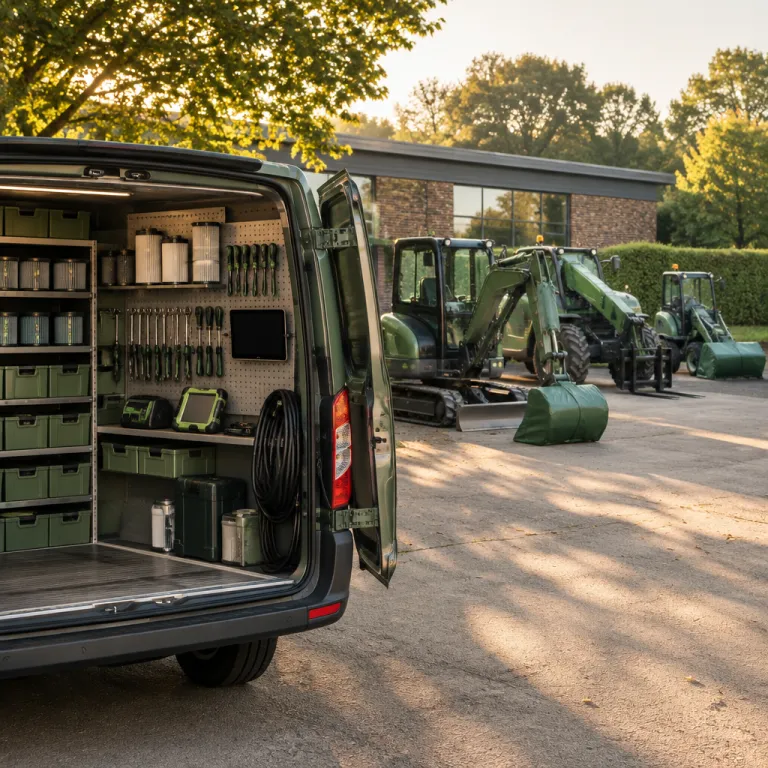
Why UK office managers need modern field service platforms for equipment dealerships
Office managers in United Kingdom equipment dealerships now sit at the centre of every service decision. Your role connects field service teams, the equipment dealer principal, and the finance office into one coherent management system that must work in real time. When field service software for equipment dealers fails, you feel the impact first through delayed work orders, missing parts, and frustrated customer calls.
In a typical heavy equipment dealership, the office coordinates service parts, rental contracts, and sales service paperwork. That means your daily operations depend on a single source of accurate data that links inventory, construction equipment availability, and every open service request across multi location branches. Without a purpose built management software platform, you end up reconciling spreadsheets, chasing technicians for updates, and re keying information between systems.
Modern field service tools give UK office teams a cloud based platform that unifies dealer management, CRM, and workshop planning. Instead of manually checking each dealership calendar, you can see all work orders, sales rental bookings, and service parts reservations in one integrated system. This kind of field service software for equipment dealers turns the office from a reactive admin hub into a proactive operations control room, as shown in case studies from UK plant hire groups that cut call handling time by more than a third after consolidating systems.
Core capabilities office managers should require from field service software
When you evaluate field service software for equipment dealers, start with the essentials that protect office productivity. The system must handle the full lifecycle of a service job, from initial customer call and CRM record through to invoicing, warranty claims, and feedback capture. If any of these steps remain outside the software platform, your team will still rely on manual workarounds.
Look for management software that links equipment records, service history, and parts inventory into a single dealer management view. A strong management system will show which heavy equipment units are on rental, which are in sales stock, and which are down for field service at any moment. This level of real time visibility allows you to schedule technicians, reserve service parts, and coordinate sales service promises without guesswork.
Office managers in United Kingdom companies can use a structured checklist to compare management systems and reduce risk. A practical guide on how office managers can evaluate field service management software with a free plan helps you test features before committing budget. By insisting on a cloud based, purpose built platform for equipment dealerships, you ensure that every dealership process from work orders to sales rental contracts runs consistently and can be audited against UK compliance and warranty standards.
Connecting office, workshop, and field teams across multi location dealerships
Fragmented communication between office, workshop, and field engineers is one of the biggest threats to service profitability. When technicians cannot update work orders from the field, the office has no real time view of labour, parts usage, or customer approvals. That gap forces office staff to chase updates by phone and email, which slows operations and increases errors.
Field service software for equipment dealers should give technicians a mobile interface that connects directly to the central management system. As they complete tasks on heavy equipment or construction equipment, they can record time, capture customer signatures, and request additional service parts from inventory. The office then sees these updates instantly, allowing accurate invoicing, warranty validation, and coordination with the sales and rental teams.
For UK office managers supporting independent consultants or small dealer branches, digital tools can extend your reach. Guidance on how UK office managers can use ChatGPT tools to empower solo consultants and independent professionals shows how automation can streamline documentation and reporting. Combined with a cloud based dealer management platform, these tools help even small equipment dealers operate with the discipline of large equipment dealerships, as illustrated by regional UK dealers that now run weekly virtual service reviews with field engineers using shared dashboards.
Data driven management of inventory, parts, and rental fleets
Every United Kingdom office manager in a dealership knows that poor inventory control quickly becomes a customer satisfaction problem. When critical service parts are missing, field service appointments slip, rental equipment sits idle, and sales teams must renegotiate delivery dates. Field service software for equipment dealers should therefore treat inventory and parts management as core capabilities, not optional extras.
A modern management software platform will track every part, component, and consumable across all dealership locations. You should be able to see which parts are reserved for open work orders, which belong to sales rental units, and which are tied to long term service contracts. This level of data transparency allows you to reduce emergency orders, negotiate better terms with third party suppliers, and maintain higher first time fix rates.
Rental and sales operations also benefit when equipment, customer, and contract information lives in one integrated system. Office teams can check whether a heavy equipment unit is available for rental, scheduled for field service, or committed to a sales order before confirming dates. By using a purpose built, cloud based management system for equipment dealerships, you align inventory decisions with service, sales, and rental profitability, mirroring the approach of UK rental fleets that now review utilisation and parts consumption weekly rather than quarterly.
Aligning office processes with dealer management strategy in UK companies
Office managers often carry the practical responsibility for turning dealer management strategy into daily routines. Senior leaders may define targets for service revenue, sales rental growth, or customer retention, but your team must translate these into workable processes. Field service software for equipment dealers becomes the operational backbone that either supports or undermines those ambitions.
In a well structured dealership, the management system reflects how the business actually runs across service, sales, and rental. Work orders, service parts, and customer communications follow standard workflows that the software enforces consistently for all dealers and branches. This consistency is especially important for multi location equipment dealerships, where office teams must coordinate heavy equipment movements, construction equipment availability, and technician capacity.
Business improvement techniques can reshape office management in UK companies when supported by the right technology. A detailed article on business improvement techniques for office management in UK companies explains how process mapping and continuous improvement link directly to software configuration. By aligning your cloud based field service platform with these techniques, you turn the office into a strategic partner for every equipment dealer in the group, with clear service level targets, escalation paths, and monthly performance reviews.
Practical steps for implementing field service software in UK equipment dealerships
Successful implementation of field service software for equipment dealers starts with clear ownership in the office. Appoint a cross functional team that includes service administrators, rental coordinators, parts specialists, and at least one senior dealer representative. This group should define standard processes for work orders, inventory control, and customer communication before any configuration begins.
Next, map how data will flow between your field service platform, accounting package, and any third party CRM or telematics systems. Decide which system will be the master record for equipment, customer, and contract information across all dealerships and branches. Clear data ownership prevents duplication, reduces reconciliation work, and ensures that every management report reflects the same reality.
Training is the final lever that turns management software into a daily habit rather than a one off project. Office managers should schedule short, focused sessions that show how the system simplifies tasks like creating work orders, checking rental availability, or allocating service parts. When staff see that the cloud based, purpose built management systems genuinely reduce effort, adoption follows naturally and the dealership realises full value, typically over a three to six month stabilisation period in UK rollouts.
Key statistics for field service and equipment dealerships
- Research from Aberdeen Group and similar service management analysts commonly reports that organisations using integrated field service platforms can reduce technician idle time by around 20 percent, which directly improves service margins for equipment dealerships.
- Independent consultancy analysis from firms such as McKinsey and Bain indicates that real time visibility of inventory and work orders can cut emergency parts orders by roughly 30 percent, helping equipment dealers protect both cash flow and customer satisfaction.
- Studies of companies adopting cloud based management systems for service operations, including reports by Gartner and IDC, often show an average 10–20 percent increase in first time fix rates, a critical KPI for heavy equipment and construction equipment dealerships.
- Analyst firms such as Gartner estimate that by the middle of this decade, more than two thirds of field service organisations will rely on mobile applications connected to a central management system, making mobile ready software a non negotiable requirement for modern dealerships.
FAQ about field service software for equipment dealers
How does field service software change the role of an office manager ?
Field service software for equipment dealers shifts the office manager role from manual coordination to strategic control. You gain real time visibility of work orders, inventory, and technician status, which allows better planning and faster decision making. This reduces administrative firefighting and frees time for process improvement across service, sales, and rental.
What systems should field service platforms integrate with in UK dealerships ?
In United Kingdom companies, field service platforms should integrate with accounting software, CRM, telematics, and any existing dealer management system. Integration ensures that equipment, customer, and financial data stays consistent across all departments. This reduces duplicate entry, improves reporting accuracy, and supports compliance with internal controls.
Why is cloud based deployment important for multi location equipment dealerships ?
Cloud based deployment allows every branch and mobile user to access the same management software without complex local infrastructure. Multi location equipment dealerships benefit from centralised updates, standardised processes, and easier security management. It also simplifies remote work for office staff and supports rapid scaling when new dealerships join the group.
How can office managers measure the impact of new field service software ?
Office managers should track KPIs such as first time fix rate, average work order cycle time, parts availability, and invoice lead time. Comparing these metrics before and after implementation shows whether the management system is improving operations. You can also monitor customer satisfaction scores and repeat business across service, sales, and rental activities.
What are the main risks when implementing management systems in dealerships ?
The main risks include unclear process ownership, poor data quality, and insufficient training for office and field staff. If equipment and customer records are inconsistent, the new system will simply automate existing problems. Careful preparation, phased rollout, and strong office leadership reduce these risks and help the dealership realise full benefits.